
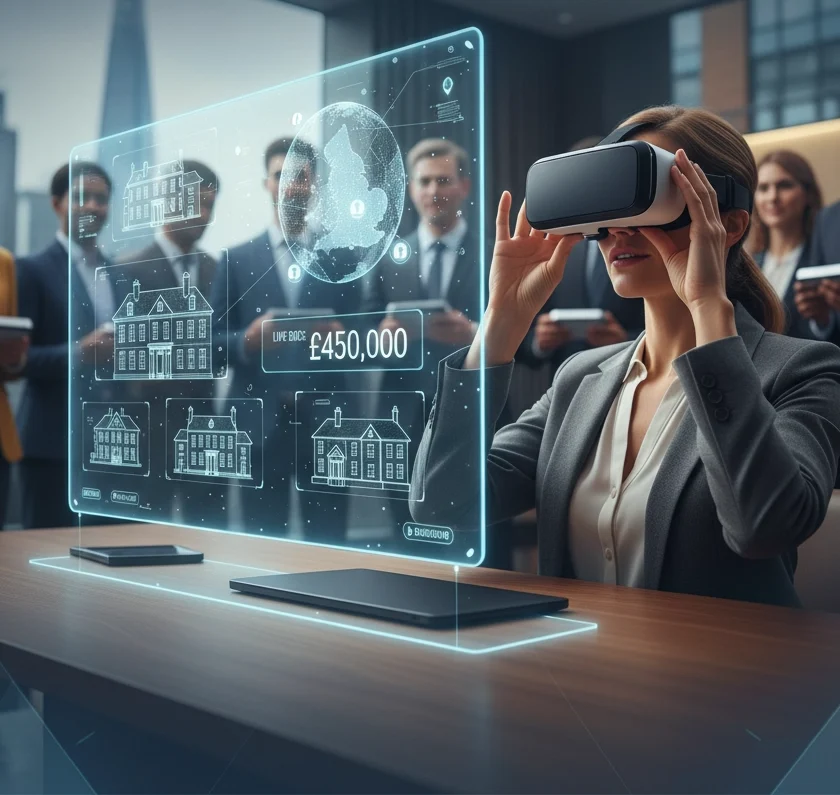

Picture this: you’re sat in your living room in Manchester, bidding on a Victorian terrace in Brighton that you’ve never physically stepped foot in. Five years ago, this would have been madness. Are traditional property viewings dead? Today? It’s Tuesday afternoon at Palace Auctions.
The property auction world has been quietly experiencing its most dramatic transformation since the gavel went digital. Virtual Reality isn’t just changing how we view properties: it’s completely rewriting the rules of how auctions operate in 2025.
The Death of “I’ll Think About It”
Traditional property viewings have always suffered from one fundamental flaw: they’re rubbish at helping people make quick decisions. You rock up to a house, spend 15 minutes wandering around with an estate agent, then spend the next week trying to remember if the kitchen was actually that small or if you’re just imagining it.
Auctions don’t have the luxury of giving bidders a week to mull things over. When that lot comes up, you’ve got minutes to decide whether you’re in or out. This is where VR has become an absolute game-changer.
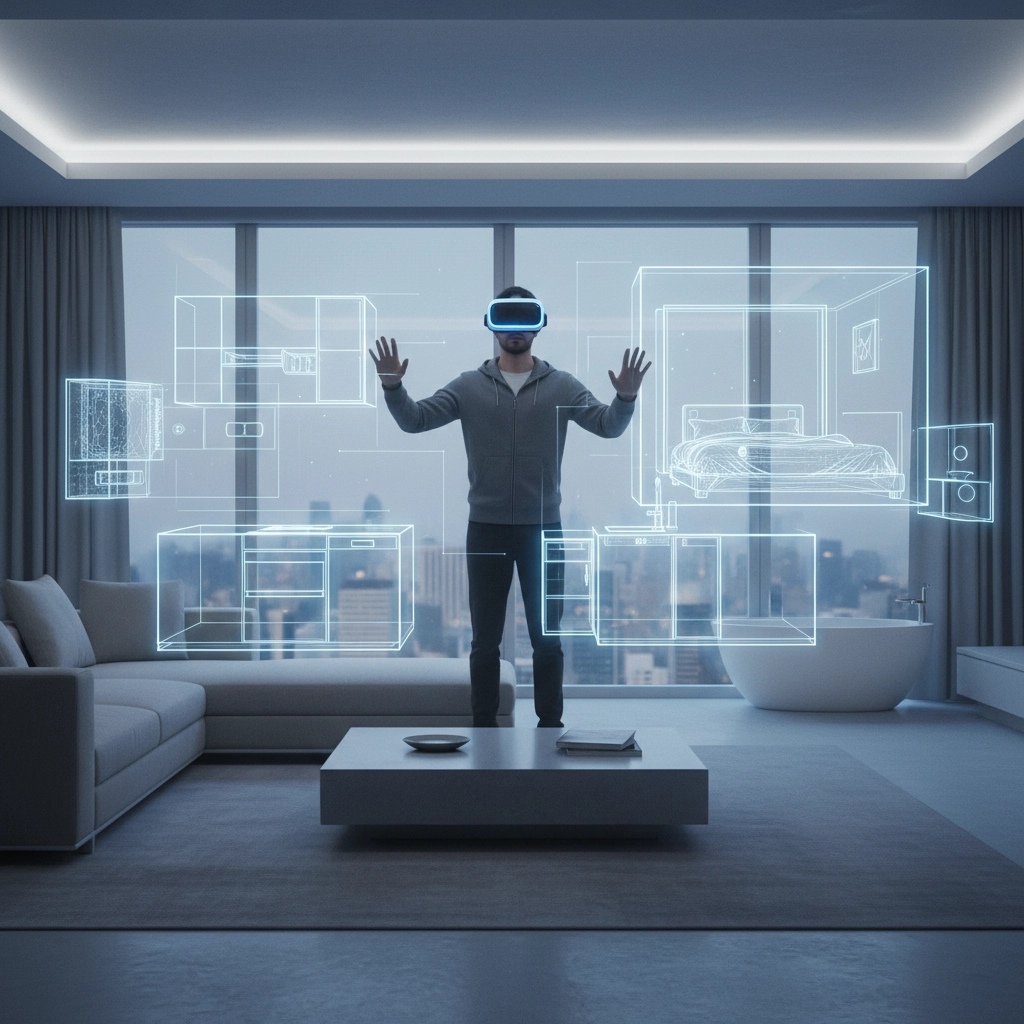
Modern VR property tours let potential bidders explore auction lots with the kind of detail that would take multiple physical visits to achieve. They can measure rooms, check ceiling heights, and even virtually stage the space to see renovation potential. All before they’ve left their office.
Why VR Makes Perfect Sense for Auctions
The auction environment has always been about speed and decisive action. Traditional viewings create bottlenecks: especially for high-demand properties where scheduling multiple viewings becomes a logistical nightmare.
VR removes these constraints entirely. A single property can host unlimited virtual viewings simultaneously. Bidders from Scotland can tour a London flat at the exact same time as someone sitting in the actual property’s living room. The democratisation is remarkable.
But here’s where it gets interesting for auction houses. VR isn’t just convenient: it’s creating more informed bidders. When Palace Auctions started offering comprehensive virtual tours, something unexpected happened: bid values increased. Sounds counterintuitive, right?
The logic is actually quite simple. Bidders who understand a property inside-out are more confident in their valuations. They’re not trying to factor in unknown risks or leaving themselves wiggle room for surprises. They know exactly what they’re getting, so they’re willing to pay closer to their true valuation.
The Numbers Don’t Lie
Estate agents using VR technology have reported reducing their viewings-to-offers conversion time by up to 55%. In auction terms, this translates to more serious bidders and fewer time-wasters turning up on the day.
Consider the maths from a bidder’s perspective. If you’re a buy-to-let investor looking to expand your portfolio, you might identify 20 potential properties across different auction houses in a month. Physically viewing all 20 would require numerous trips, time off work, and probably a small fortune in travel costs.
With VR, you can thoroughly evaluate all 20 properties in a couple of evenings. The ones that make your shortlist get the physical viewing treatment. It’s a filtering system that works for everyone.
Beyond the Basic Walkthrough
Today’s VR technology has moved far beyond the jerky 360-degree photos that made everyone feel seasick. Modern platforms integrate AI to create genuinely immersive experiences that reveal details you might miss during a rushed physical viewing.
Interactive floor plans show precise measurements. Virtual staging demonstrates renovation potential. Heat maps highlight structural issues. Some systems even simulate different lighting conditions throughout the day, giving bidders a realistic sense of how the property feels at different times.
For auction houses, this technology creates value in unexpected ways. Properties that might struggle to attract interest due to location or timing constraints suddenly become accessible to a global audience. A commercial unit in Newcastle can attract serious interest from London-based investors who would never have made the trip for a traditional viewing.
The Hybrid Model That Actually Works
Here’s the thing though: traditional viewings aren’t dead. They’re just being used more intelligently.
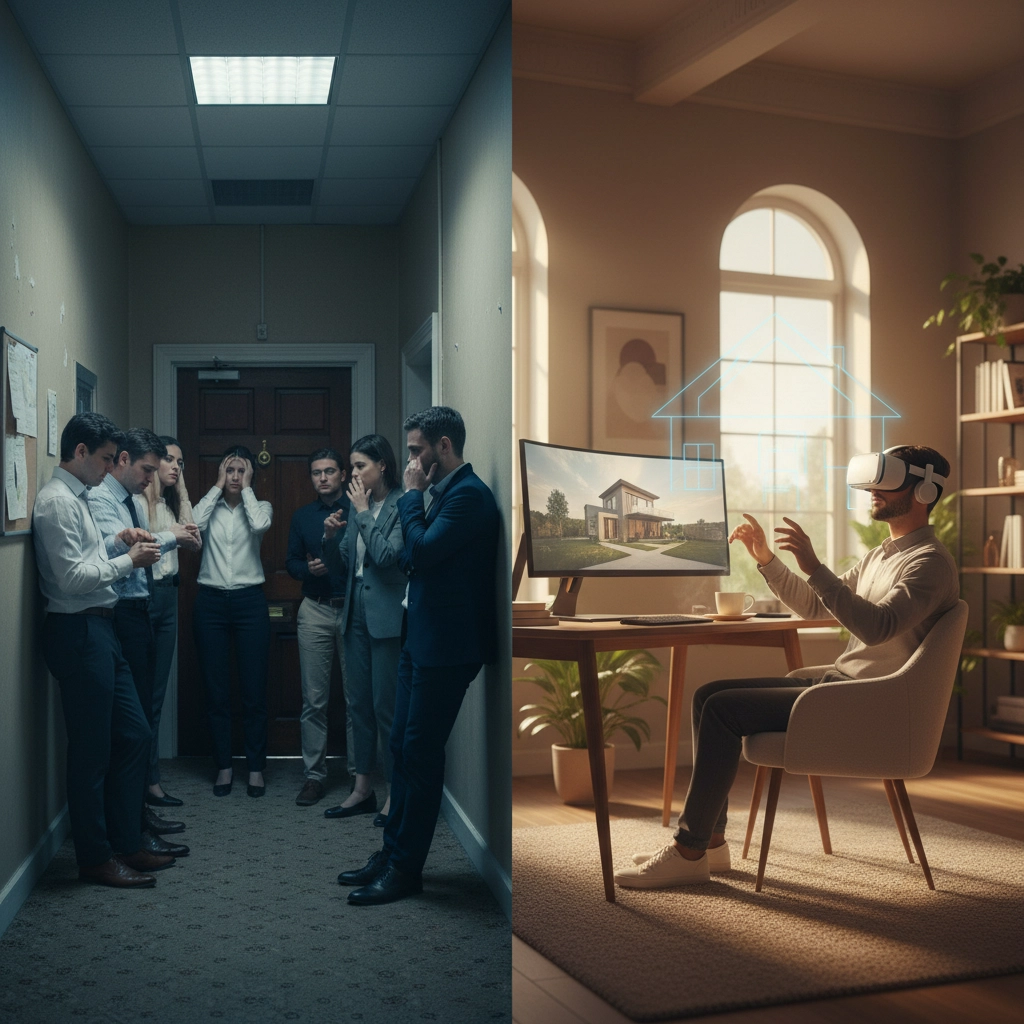
Smart bidders now use VR as their primary research tool, then schedule physical viewings only for properties that have made their final shortlist. This creates a much more efficient process where physical viewings are focused and purposeful rather than speculative fishing expeditions.

For sellers, this hybrid approach often results in better outcomes. Instead of hosting multiple viewings for casual browsers, they’re dealing with genuinely interested parties who’ve already done their homework. The quality of questions improves, the time investment reduces, and the likelihood of receiving serious bids increases.
Breaking Down Geographic Barriers
One of the most significant shifts VR has enabled is the expansion of bidder pools beyond traditional geographic constraints. Previously, most auction bidders were local or regional. The time and cost involved in travelling to view properties limited participation.
VR has effectively eliminated distance as a barrier to participation. International investors, pension funds, and private buyers from anywhere in the UK can now meaningfully participate in local auction markets. This increased competition often translates directly into higher final bid prices.
The technology also enables new types of auction formats. Some houses now run “virtual viewing parties” where multiple interested parties can tour properties together, ask questions in real-time, and even interact with each other. It’s creating a social element that traditional viewings never offered.
What This Means for Auction Strategy
If you’re buying at auction, your research game needs to evolve. The bidders who consistently win are those who’ve used VR to thoroughly understand properties before the auction day arrives.
This means getting familiar with the technology if you haven’t already. Most VR tours work on everything from smartphones to dedicated headsets, so the barrier to entry is minimal. The competitive advantage, however, is significant.
For auction houses, offering high-quality VR experiences has become less of a nice-to-have and more of a market necessity. Bidders increasingly expect this level of access, and properties without virtual tours often struggle to generate the same level of interest.
The Road Ahead
As we move deeper into 2025, the technology continues to evolve. AI integration is making virtual tours more intelligent and informative. Augmented reality elements are beginning to overlay useful information directly onto the viewing experience. Some platforms are even experimenting with virtual reality auctions where the entire bidding process happens in a shared virtual environment.

The transformation isn’t just technological: it’s cultural. A generation of property investors and auction participants who’ve grown up with digital-first experiences are entering the market with different expectations about how property transactions should work.
Traditional viewings aren’t dead, but they’ve certainly evolved into something more refined and purposeful. VR has become the great filter that separates genuine interest from casual browsing, creating more efficient markets for everyone involved.
The auction houses that have embraced this change are seeing the benefits in terms of bidder engagement, final sale prices, and operational efficiency. Those that haven’t are increasingly finding themselves at a competitive disadvantage.
The revolution isn’t coming: it’s already here. The question isn’t whether VR will continue to transform property auctions, but how quickly the entire industry will adapt to this new reality. For bidders and sellers alike, understanding and leveraging these technologies has become essential for success in today’s auction market.
….