


In this beginner’s guide to auctions, we’ll delve into how auctions offer a transparent, competitive way to buy and sell valuable assets. In the UK, auctions are used for property, art, vehicles, and more. The process is fast, open, and can deliver excellent results for both buyers and sellers. Auctions are governed by strict rules, ensuring fairness and clarity. Whether you are a first-time buyer or an experienced investor, understanding the basics is essential. This guide will help you navigate the auction world with confidence. We focus on property auctions but also cover other key auction types. Our aim is to make the process clear, accessible, and rewarding for you.
There are several auction types in the UK. The most common are:
Auctions are used for property, art, high-value assets, vehicles, and commercial premises. Each type has unique features and rules. For more on auction types, see the RICS Consumer Guide to Property Auctions.
Property auctions are a popular way to buy and sell real estate in the UK. They offer speed, certainty, and transparency. Both residential and commercial properties are sold at auction. Buyers can find homes, investment properties, and development opportunities. Sellers benefit from a defined timeline and competitive bidding. Auctions are open to everyone, including first-time buyers and investors. The process is governed by strict legal and professional standards. For more on our property auction services, visit our Property Auctions page.
For a detailed process, see the NAEA Propertymark Auction Guide.

For more terms, see our Auction Terminology page.
For practical tips, visit Moneysaving Expert’s Auction Guide.
To bid at auction, you must register in advance. Registration is simple and secure. You will need to provide proof of identity and address. Some auctions require a deposit or bidding security. Online auctions may require account verification and payment details. Always check the auction house’s requirements. Early registration ensures you are ready to bid without delay. For more on registration, see the GOV.UK Auction Premises Registration page.
Successful bidding requires preparation and discipline. Set a maximum bid before the auction. Stick to your budget and avoid emotional bidding. Watch the auctioneer and other bidders for signals. Consider bidding early to show intent, or late to surprise competitors. Use proxy or telephone bidding if you cannot attend in person. In online auctions, monitor the countdown and place bids confidently. Remember, the highest bid wins if the reserve is met. For more strategies, see our Investment Advisory page.
Buying at auction is legally binding. When the hammer falls, contracts are exchanged instantly. The legal pack contains vital documents, including title deeds and special conditions. Review these with a solicitor before bidding. Understand your obligations and the completion timeline. The deposit is usually 10% of the purchase price. Completion typically occurs within 20–28 days. Failure to complete can result in loss of deposit and legal action. For legal standards, see the RICS Consumer Guide.
After a successful bid, you must pay a deposit immediately. This is usually 10% of the final price. Payment methods include bank transfer, debit card, or banker’s draft. The balance is due within the completion period, usually 20–28 days. Ensure your funds are ready before bidding. Some auctions charge a buyer’s premium or administration fee. Check all payment terms in advance.
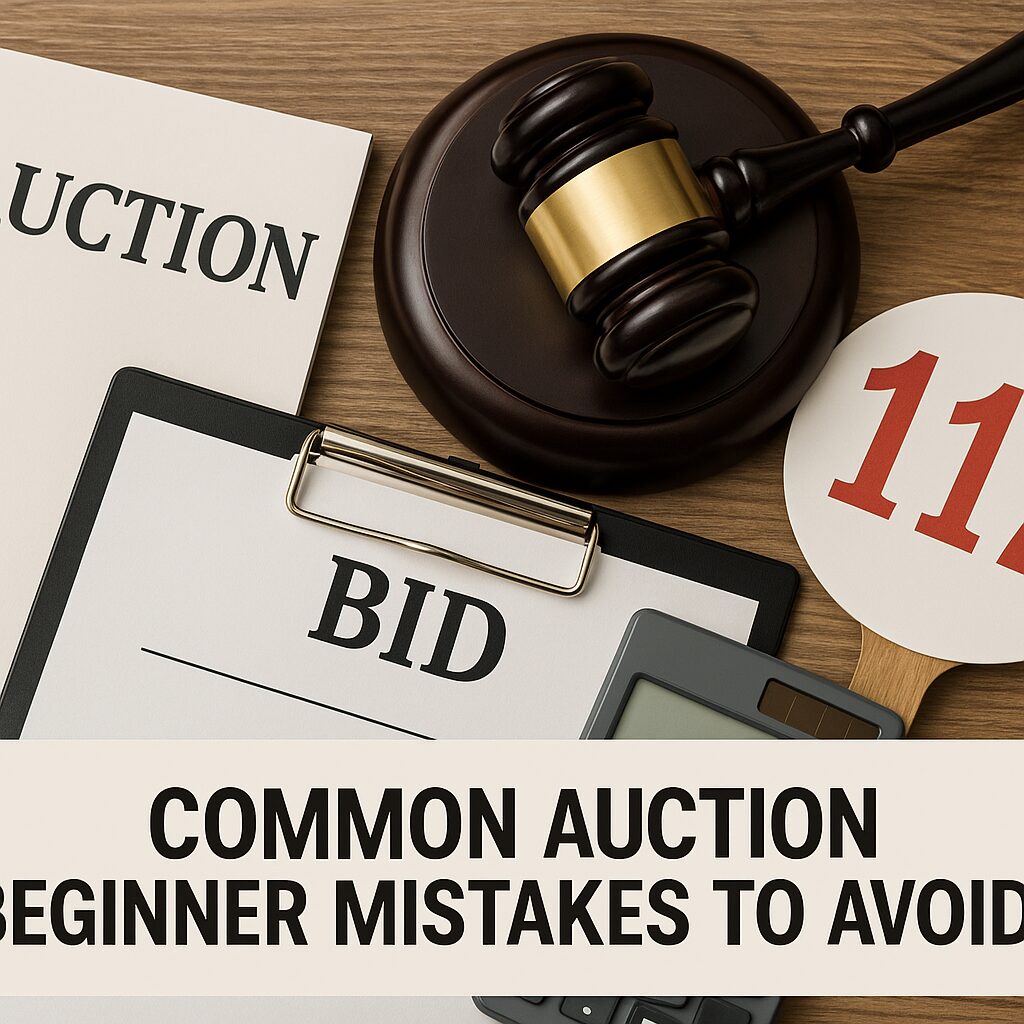
Learn from others’ experiences to avoid costly errors.
Respect the auctioneer and other bidders at all times. Arrive early for live auctions and listen to announcements. Bidding is usually by raising your hand or paddle. Only bid if you intend to buy. In online auctions, follow the platform’s instructions. Do not disrupt the process or distract others. If unsure, ask staff for guidance. Good etiquette ensures a smooth and fair auction for everyone.
After winning, sign the contract and pay the deposit immediately. Your solicitor will handle the legal transfer. Arrange insurance and prepare for completion. Pay the remaining balance within the agreed period. Collect the keys and take possession on completion day. If you do not win, review your experience and prepare for the next auction. For more on post-auction steps, see the Citizens Advice Auction Guide.
Ready to take part in your first auction? Start by researching upcoming events and registering early. Attend a live or online auction as an observer to gain confidence. Speak with our team for tailored advice and support. Explore our Charity Auctions page for community opportunities. Stay informed by subscribing to our updates and guides. With preparation and expert support, you can succeed at auction. We are here to guide you every step of the way.
Page last updated: 2025-12-05
palaceauctions.com/buying-at-auction/guide-prices-explained/
nrla.org.uk/training-academy/elearning/property-auctions,
udemy.com/course/how-to-buy-property-at-auction/
Summary:
This text provides a comprehensive, step-by-step guide for beginners interested in UK property auctions, including types of auctions, terminology, preparation, post-auction steps.
Enter your email address and we will send you a link to change your password.