
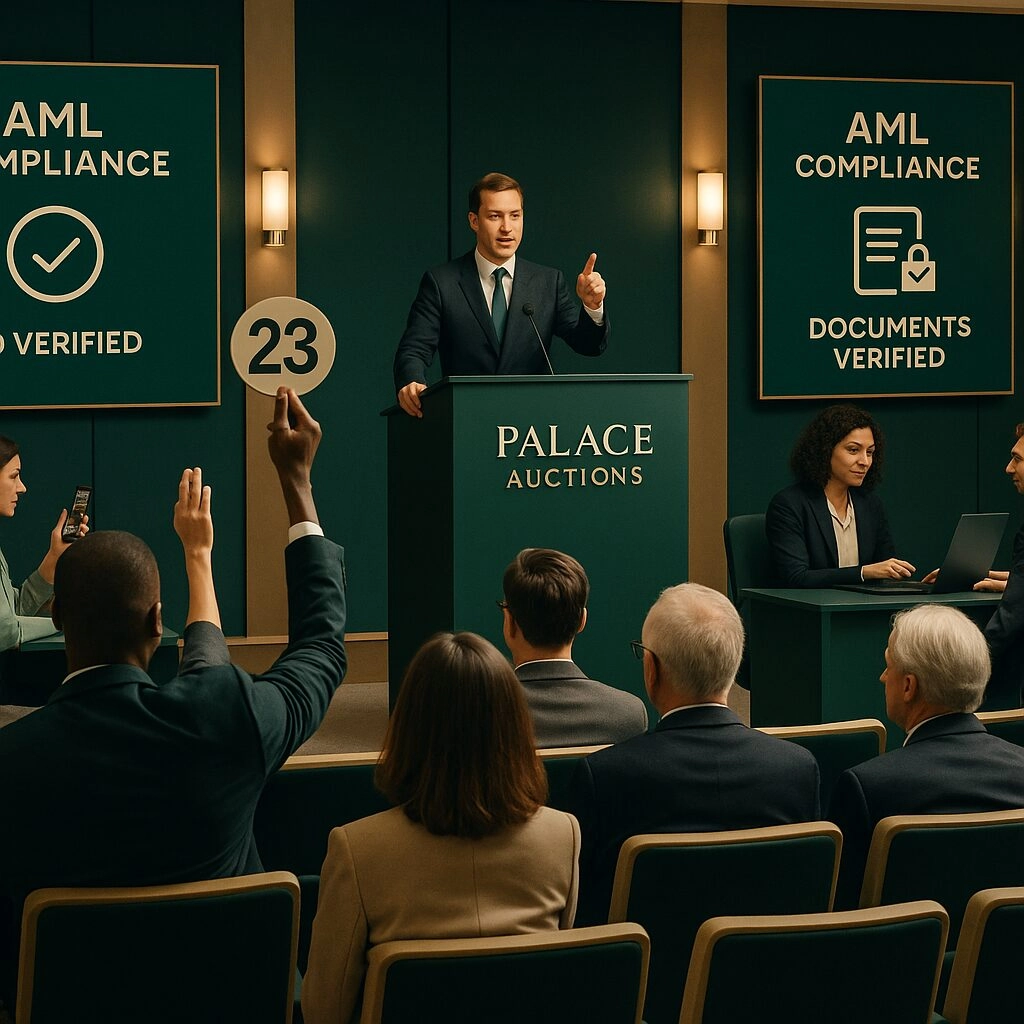

Palace Auctions Logo

AML Property Auctions: Complete Buyer Compliance Guide 2025

Understanding AML Requirements in Property Auctions

Anti-money laundering (AML) checks are now mandatory for all participants in AML property auctions across the UK. Every buyer must complete comprehensive verification before bidding begins. These requirements protect both buyers and auction houses from regulatory penalties and criminal activity.

Property auctions present unique challenges for money laundering prevention. Auction houses must verify all participants thoroughly. The fast-paced nature of these sales requires pre-registration and complete documentation submission.

Recent statistics show that suspicious wealth worth £6.7 billion entered the UK property market between 2016 and 2022. Regulatory authorities continue strengthening oversight of AML property auctions. Understanding these requirements helps buyers prepare effectively and avoid costly delays.


The Money Laundering Regulations 2017

UK property auction houses operate under strict Money Laundering Regulations established in 2017. All auction businesses must register with HM Revenue & Customs (HMRC) for proper supervision. Operating without valid registration constitutes a serious criminal offense.

These regulations specifically classify property auctioneers as “estate agency businesses.” They must implement robust anti-money laundering procedures. Auction houses face severe penalties for non-compliance, including fines up to £175,701.

Recent 2025 Regulatory Updates

Several important changes took effect in 2025 for AML property auctions. All monetary thresholds now use pounds sterling instead of euros. Enhanced due diligence requirements apply only to high-risk transactions and FATF high risk countries.

Digital identity verification has received government endorsement. New standards provide clearer guidance for electronic verification tools. Many auction houses now offer streamlined digital onboarding processes.

From May 2025, sanctions checks became mandatory for all property transactions regardless of value. Auction houses must use official OFSI databases for verification. Buyers should expect routine sanctions screening during registration.


Essential Documentation for AML Property Auctions

Individual Buyer Requirements

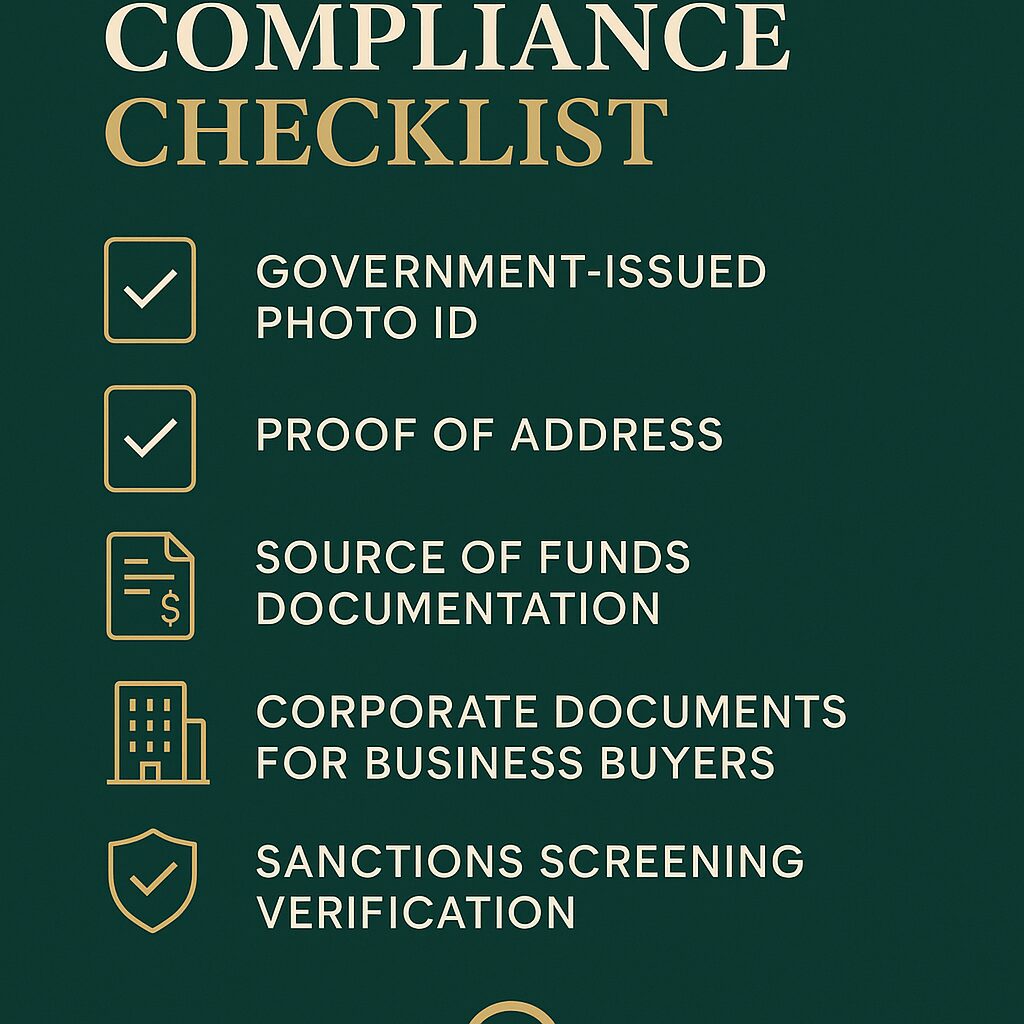
Property auction buyers must provide comprehensive documentation for identity verification. Acceptable identification includes government-issued photo ID such as passports or driving licenses. Recent proof of address documents like utility bills or bank statements are required.

Source of funds documentation is crucial for AML property auctions compliance. Buyers must demonstrate legitimate origins for both deposits and full purchase amounts. Bank statements covering the transaction period help establish financial capacity.

Corporate Buyer Documentation

Companies participating in AML property auctions face additional verification requirements. Corporate buyers must provide certificates of incorporation and memorandum articles. Beneficial ownership information for all individuals holding 25% or greater stakes is mandatory.

Directors’ identification documents and company bank statements complete the corporate verification package. Proof of business activities helps establish legitimate commercial purposes. Corporate buyers should prepare comprehensive documentation packages well in advance.

International Buyer Considerations

Overseas participants in AML property auctions encounter heightened scrutiny due to geographic risks. International buyers must provide apostilled identification documents with certified English translations. International bank references and tax residency certificates may be required.

Source of wealth declarations become particularly important for international participants. Verification timelines typically extend for overseas documentation processing. International buyers should allow extra time for AML property auctions registration.


The Complete AML Verification Process

Pre-Registration Requirements

Buyers cannot participate in AML property auctions without completing verification beforehand. Prospective bidders must register with the auction house and submit all required documents. The standard verification process typically takes 2-3 business days.

Early registration prevents last-minute complications and ensures auction participation. Incomplete documentation frequently causes registration delays. Buyers should prepare comprehensive packages and submit them well before auction dates.

Customer Due Diligence Procedures

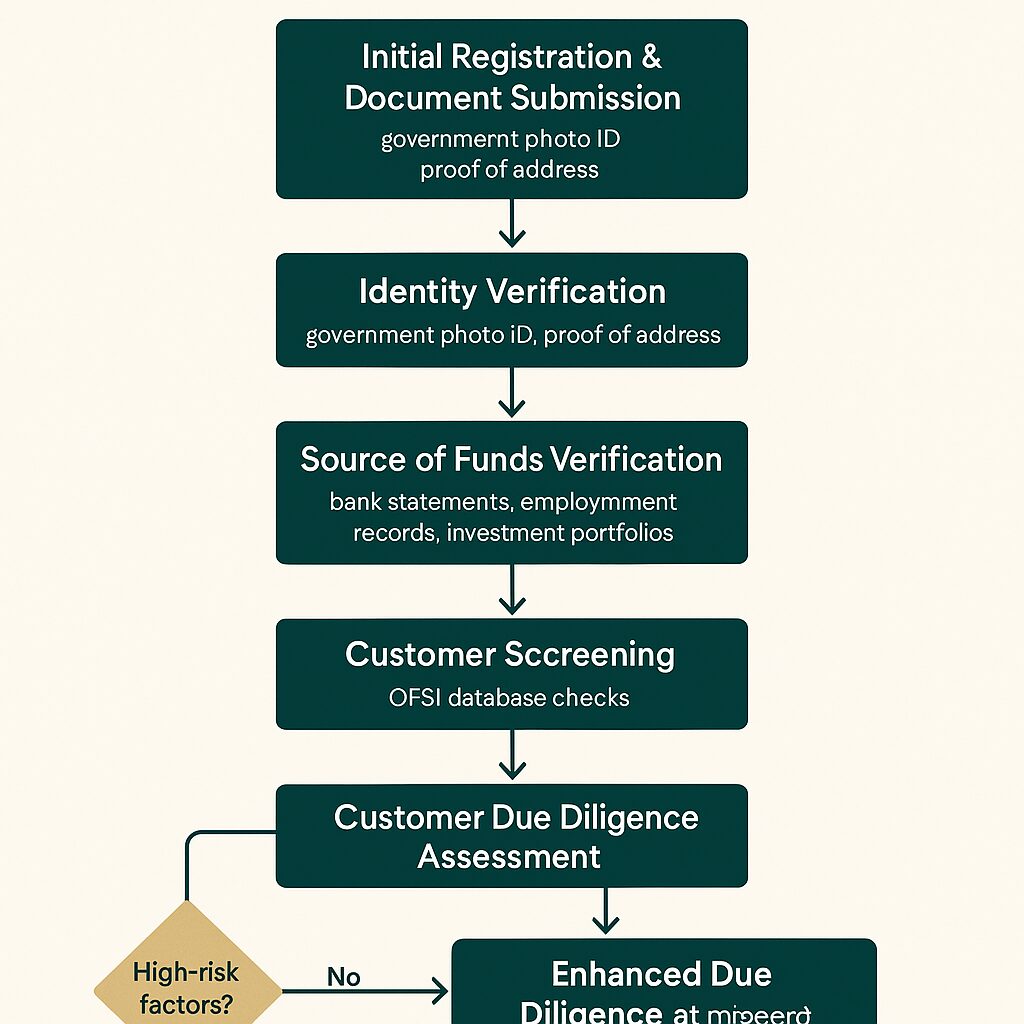
Standard customer due diligence forms the foundation of AML property auctions compliance. Auction houses must verify buyer identities and assess transaction risks comprehensively. Buyers should expect detailed questioning about their property investment intentions.

Risk assessment considers multiple factors including buyer profiles, geographic origins, and transaction complexity. Auction houses must understand the nature and purpose of business relationships. Transparent communication about investment plans facilitates smoother verification.

Enhanced Due Diligence Triggers

Certain circumstances automatically trigger enhanced due diligence in AML property auctions. Buyers from high-risk jurisdictions face additional scrutiny. Transactions involving politically exposed persons require enhanced verification procedures.

Property for sale A compliance checklist for property auction buyer verification on a green background with gold text and icons lists: government-issued photo ID, proof of address, source of funds, corporate documents, and anti-money laundering property auctions screening. Presented by Palace Auctions


Purchase amounts exceeding normal patterns or complex ownership structures also trigger enhanced checks. Third-party funding arrangements require additional documentation and verification. Buyers should prepare for extended timelines when these factors apply.


Source of Funds Verification in AML Property Auctions

Understanding Source Requirements

Auction houses must verify fund sources for both deposits and full purchase prices in AML property auctions. This verification prevents money laundering and ensures transaction legitimacy. Buyers should prepare comprehensive financial documentation demonstrating legitimate origins.

Acceptable source evidence includes employment contracts, salary statements, and business profit records. Property sale proceeds documentation and investment portfolio statements prove helpful. Inheritance documentation with supporting evidence establishes legitimate wealth transfer.

Third-Party Funding Complexities

Third-party funding arrangements in AML property auctions require additional verification steps. Written authority must confirm relationships between buyers and funding sources. Complex funding structures may trigger enhanced due diligence automatically.

Both buyers and funding sources undergo separate identity verification processes. The legitimacy of funding arrangements requires independent confirmation. Buyers using third-party funding should prepare additional documentation and expect longer processing times.

Common Source Verification Issues

Many buyers underestimate source of funds requirements in AML property auctions. Insufficient documentation causes verification delays and potential participation exclusion. Vague financial statements or incomplete transaction histories create compliance challenges.

Cash deposits or unexplained wealth transfers raise immediate red flags. Circular funding arrangements or complex trust structures require detailed explanations. Transparent financial documentation and clear audit trails facilitate successful verification.


Sanctions Screening in Property Auctions

New Mandatory Screening Requirements

From May 2025, all participants in AML property auctions must undergo sanctions screening. These checks apply regardless of transaction values and use official OFSI databases. Buyers should expect routine sanctions verification during registration processes.

Sanctions checks cover buyers, sellers, agents, and funding sources comprehensively. Politically exposed persons face enhanced screening procedures automatically. Family members and close associates may require additional verification.

Handling Sanctions Matches

If sanctions screening identifies potential matches, auction houses must freeze relevant assets immediately. They must report suspected matches to OFSI without delay. Buyers facing false positive matches may experience transaction delays during verification.

Clear documentation helps resolve false positive sanctions matches quickly. Providing alternative identification or spelling variations assists verification teams. Buyers with common names should prepare additional identifying information.


Technology and Digital Verification

Government-Endorsed Digital Solutions

The UK government now supports digital identity verification for AML property auctions compliance. New standards provide greater clarity and assurance for electronic verification implementation. Many auction houses increasingly adopt digital verification systems.

Digital solutions offer several advantages including faster processing times and enhanced security features. Remote verification capabilities improve accessibility for buyers nationwide. Streamlined user experiences reduce documentation handling requirements.

Benefits of Digital Verification Systems

Digital verification in AML property auctions provides immediate identity confirmation and reduces processing delays. Automated checks flag potential issues earlier in the process. Buyers benefit from faster approval and more efficient registration experiences.

Electronic systems also enhance data security through encrypted storage and controlled access. Automated record-keeping improves audit trails and regulatory compliance. Digital platforms often provide real-time status updates for buyers.


Consequences of Non-Compliance

Penalties for Auction Houses

Non-compliant auction houses face severe regulatory penalties ranging from £1,500 to £175,701. Serious violations may result in criminal prosecution and potential imprisonment. 194 agents faced penalties exceeding £1 million in 2024-2025, primarily for registration failures.

HMRC conducts regular compliance checks and publishes names of non-compliant businesses. Enforcement action can result in business closure and reputation damage. Auction houses maintain rigorous compliance procedures to protect their operations.

Impact on Buyers

Buyers failing to complete AML property auctions verification face immediate exclusion from participation. Transactions may be cancelled if post-sale verification reveals compliance failures. Thorough preparation prevents costly delays and missed opportunities.

Incomplete or fraudulent documentation can result in permanent exclusion from future auctions. Suspicious activity reports may be filed with the National Crime Agency. Buyers must ensure complete accuracy and transparency throughout verification processes.

Property for sale A flowchart showing steps for customer due diligence in property auction buyer verification: initial registration, identity and funds checks, customer screening, due diligence assessment, and enhanced checks for high-risk anti-money laundering property auctions. Presented by Palace Auctions


Best Practices for Successful Participation

Early Registration Strategy

Successful participation in AML property auctions requires early compliance completion and registration. Buyers should register at least one week before desired auction dates. Preparing comprehensive documentation packages prevents last-minute verification delays.

Professional advisory support helps navigate complex AML requirements effectively. Solicitors and compliance specialists identify potential issues before they cause problems. Buyers should consider professional guidance for high-value or complex transactions.

Documentation Maintenance

AML verification documents have limited validity periods that buyers must monitor carefully. Expired identification or proof of address documents require replacement before verification completion. Maintaining current documentation ensures smooth renewal processes.

Regular review of documentation requirements helps buyers stay prepared for multiple auction participation. Digital copies facilitate quick submission when opportunities arise. Organized document management supports successful auction strategies.


Working with Professional Advisors

Complex AML property auctions requirements often benefit from professional legal guidance. Experienced property solicitors provide valuable support throughout compliance processes. They identify potential issues and recommend solutions before problems develop.

Compliance specialists understand regulatory requirements and help prepare comprehensive documentation packages. They liaison with auction houses to resolve verification issues quickly. Professional support reduces stress and improves success rates.

Ongoing Relationship Management

Building relationships with compliance professionals supports long-term auction strategies effectively. Trusted advisors understand individual circumstances and streamline future transactions. Ongoing professional relationships provide significant value for active property investors.

Regular compliance reviews ensure continued adherence to evolving regulations. Professional monitoring of regulatory changes helps buyers stay current. Proactive compliance management reduces risks and maintains market access.


Preparing for Future Regulatory Changes

Staying Current with Requirements

AML property auctions regulations continue evolving as authorities strengthen oversight and close loopholes. Buyers must stay informed about requirement changes and adapt their preparation accordingly. Professional advisory relationships help maintain compliance currency.

Industry publications and regulatory updates provide valuable information about upcoming changes. Auction houses often communicate requirement updates to registered participants. Active monitoring of multiple information sources ensures preparation effectiveness.

Building Robust Compliance Systems

Developing comprehensive compliance systems supports efficient participation in AML property auctions. Organized documentation and systematic preparation reduce processing times significantly. Robust systems scale effectively as investment activities expand.

Regular system reviews and updates ensure continued effectiveness as regulations evolve. Feedback from verification experiences helps improve future preparation. Systematic approaches to compliance management provide competitive advantages.


Contact and Support Resources

Palace Auctions Compliance Team

Our experienced compliance team provides comprehensive support throughout the AML property auctions verification process. We offer clear guidance regarding documentation requirements and processing timelines. Buyers receive professional assistance ensuring smooth auction participation.

Contact our compliance specialists today to begin your registration process. We provide personalized guidance for complex transactions and international buyers. Early engagement ensures adequate preparation time for successful participation.

Getting Started with Your Registration

Ready to participate in our upcoming AML property auctions? Our streamlined registration process ensures efficient verification while maintaining complete regulatory compliance. Our team guides you through each step to minimize delays and maximize preparation effectiveness.

Start Your Registration Today: Complete your AML verification early and secure your position for upcoming property auctions. Our comprehensive support ensures successful compliance and smooth auction participation experiences.


Conclusion

Understanding AML property auctions requirements protects buyers from costly delays and ensures successful participation. Proper preparation and early registration provide competitive advantages in fast-paced auction environments. Investing time in compliance preparation delivers significant returns through enhanced market access and reduced transaction risks.

Contact our compliance team today to begin your verification process and secure your position in upcoming AML property auctions. Our professional support ensures comprehensive compliance and successful participation in the UK’s premier property auction marketplace.


This guide provides general information about AML requirements for UK property auctions. Individual circumstances may require additional documentation or procedures. Contact our compliance team for personalized guidance regarding your specific situation and requirements.


Page last updated: 18 November 2025, 10:09 GMT


AML Quick Checklist

AML Checks at Palace Auctions London

 Understanding Anti-Money Laundering Requirements in Property Auctions

 At Palace Auctions London, we take our legal obligations seriously. Anti-Money Laundering (AML) regulations are essential in maintaining the integrity of property transactions Let’s explain what this means for you and why these checks are so important.

Why We Need to Check

“Think of AML checks as your property’s passport control – they protect everyone involved in the transaction. “The law requires all property professionals to verify the identity of their clients and understand the nature of their business. This helps:

  • Prevent money laundering
  • Combat terrorist financing
  • Protect the property market’s integrity
  • Ensure legal compliance
  • Safeguard your interests


What We Need From You

 For Individual Buyers and Sellers

Proof of Identity


We’ll need one of these:

  • Current passport
  • UK/EU photo driving license
  • National identity card


Proof of Address

 One of these dated within the last three months:

  • Utility bill (not mobile phone)
  • Bank or building society statement
  • Council tax bill
  • Recent mortgage statement.


For Companies and Business Entities

 When you’re buying or selling through a company, we need:

  • Company registration details
  • Proof of registered address
  • Directors’ identification
  • Proof of trading address
  • Ultimate beneficial owner information


“Working through a company? We’ll guide you through the additional requirements step by step.”

Source of Funds

For buyers, we need to understand where your purchase funds come from. This might include:

  • Bank statements
  • Savings account information
  • Investment portfolio details
  • Evidence of property sale
  • Inheritance documentation
  • Business sale proceeds


“Being open about your funding sources helps us process your registration quickly and smoothly. It also strengthens your position as a buyer.

When Do We Need This?

 For Sellers

  • When you first instruct us to sell
  • Before we can market your property
  • Prior to auction entry.


  • For Buyers
  • During registration
  • Before bidding rights are granted
  • Prior to exchange of contracts

How We Handle Your Information

Your privacy matters to us. Here’s our commitment:

  • Secure digital storage
  • Restricted access
  • Compliance with GDPR
  • Regular data reviews
  • Professional confidentiality


Making It Easy For You


We’ve streamlined our AML process to be as convenient as possible:


Digital Verification

  • Upload documents securely online
  • Quick verification process
  • Available 24/7
  • Mobile-friendly platform


In-Person Verification

  • Visit our London office
  • Same-day verification possible
  • Personal assistance available
  • Professional guidance


Common Questions

How long does verification take?

Typically 1-2 hours during business hours if all documents are in order.

Can I bid without completing AML checks?

No – it’s a legal requirement that must be completed before bidding.

How long are checks valid for?

Usually 6 months, unless your circumstances change.

Need Help?

Our dedicated compliance team is here to assist:

  • Document queries
  • Verification issues
  • General guidance
  • Special circumstances

Contact Our AML Team


📞 AML Helpline: 0207 101 36 47

✉️ Compliance Email: [aml@palaceauctions.com]

🌐 Online Support: Available during office hours


“Let us help you navigate the AML requirements smoothly and efficiently.”


Ready to Get Started?

Begin your AML verification now: [Start Verification Process]

Useful Resources

Download our guides:

  • AML Documentation Checklist
  • Company Verification Guide
  • Source of Funds Evidence Guides

Palace Auctions London: Ensuring Security and Compliance in Property Auctions

Reset password

Enter your email address and we will send you a link to change your password.

Get started with your account

to save your favourite homes and more

Sign up with email

Get started with your account

to save your favourite homes and more

By clicking the «SIGN UP» button you agree to the Terms of Use and Privacy Policy

Create an agent account

Manage your listings, profile and more

Phone

Buyers will use it to contact you.

By clicking the «SIGN UP» button you agree to the Terms of Use and Privacy Policy

Create an agent account

Manage your listings, profile and more

Sign up with email