

Palace Auctions Logo

Modular Homes Investment: Your Gateway to Future Property Markets

Introduction: Embracing the Future of Property Investment Through Modular Homes

The modular homes investment landscape is one of the most dynamic areas in today’s property market. It gives smart buyers and forward-thinking investors unique chances for strong returns and sustainable living. In 2024, analysts value the UK modular construction market at £15.73 billion, and they expect it to reach £25.10 billion by 2030. This fast-growing sector has clear advantages over traditional construction, showing an average ROI of 53% compared to 47.4% for conventional properties. Construction times are also 5.5 months faster on average.

Whether you’re a first-time buyer looking for affordable homeownership, an investor seeking higher yields, or a developer exploring new methods, the modular homes sector offers opportunities that mix financial gains with environmental sustainability. By using smart technology, sustainable materials, and factory precision, these homes meet modern needs while providing excellent investment returns.

Understanding the Modular Home Revolution

The shift of modular homes from temporary to permanent, high-quality residences is a big change in building and investing. Today, modular homes make up 12% of all new home sales in the UK, rising from 7% in 2021. Sales are set to increase by another 25% by 2025. This growth reflects new construction methods and a fresh look at property development. It addresses key issues like housing shortages, sustainability, and affordability.

Modern modular construction uses advanced Building Information Modelling (BIM), precision engineering, and high-quality standards that often surpass those of site-built homes. The factory-controlled environment prevents weather delays, cuts material waste by up to 90%, and maintains consistent quality through strict testing. Major manufacturers like Laing O’Rourke, Premier Modular, and Top Hat have invested billions in cutting-edge facilities that produce homes on par with traditional builds.

Investment Performance: Superior Returns Through Innovation

A comparison of modular and traditional property investments shows clear financial benefits. Savvy investors are recognizing these advantages more than before. Modular homes have an average 5-year ROI of 53%, while traditional properties sit at 47.4%. This outperformance comes from several key factors.

Builders construct modular homes in less time, which enables earlier rental income. The initial investment costs are lower, with entry-level modular properties averaging £199,000, while traditional builds cost £225,000. Lastly, modular homes provide rental yields of 5.5%, whereas conventional homes yield 5.0%.

This superior performance holds true across all market scenarios. In conservative environments with 2% annual appreciation, modular properties achieve returns of 39.25%, compared to 34.33% for traditional homes. In more optimistic 6% appreciation scenarios, returns reach 68.78% versus 62.82%. This consistent outperformance across different market conditions highlights the benefits of modular construction, rather than temporary market shifts.

International investors gain significant benefits from these trends. Currency advantages and quicker deployment times boost returns.

The rental market also shows strong support for modular home investments. Average monthly rents hit £2,526 in high-demand areas, with vacancy rates below 5%. This means modular properties can generate income that matches or exceeds traditional options. They need less maintenance and offer better energy efficiency, attracting quality tenants. Manufactured housing REITs, which hold large modular home portfolios, report occupancy rates of 93-97% and annual NOI increases of 8-15%. This shows strong institutional confidence in the sector’s long-term potential.

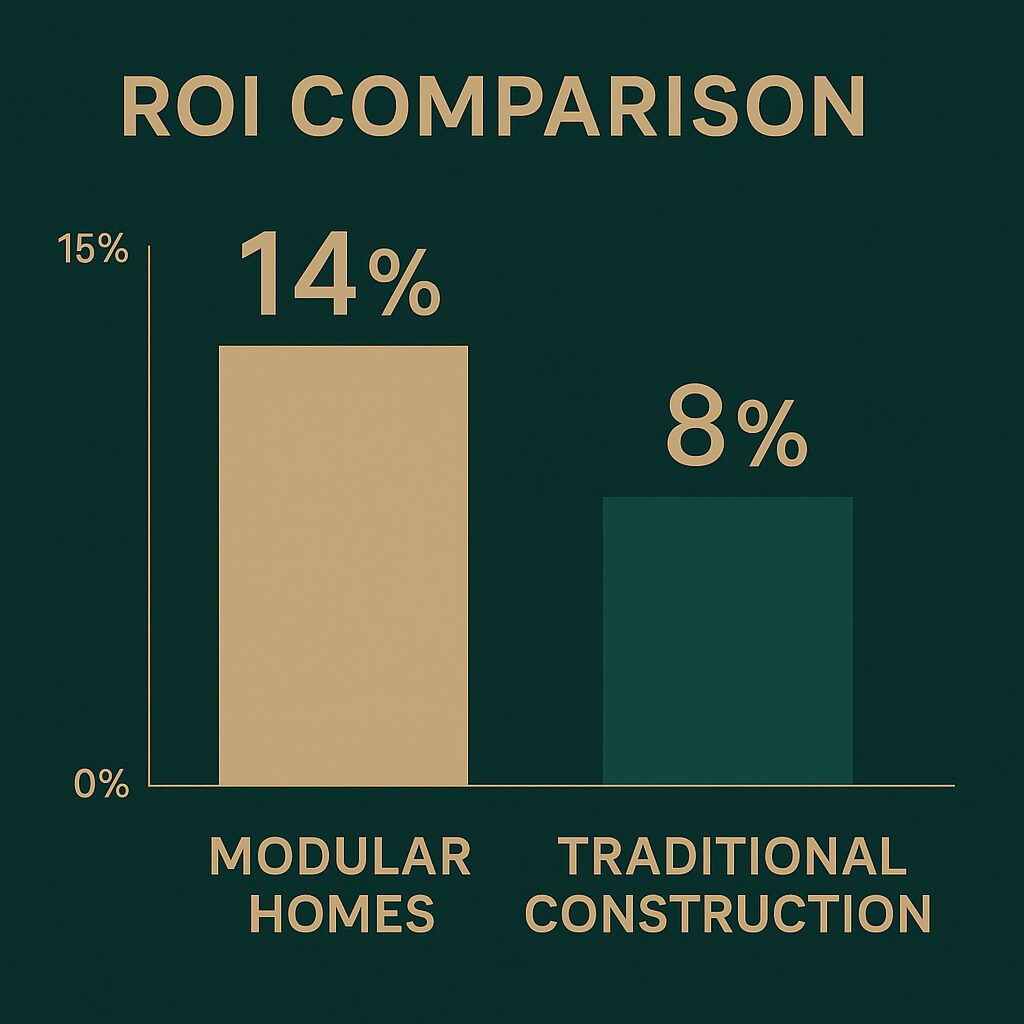
Property for sale Bar graph comparing ROI: Modular homes investment shows a 14% ROI, while traditional construction has 8%. The modular homes bar is taller and highlighted in a lighter color. Presented by Palace Auctions


Technological innovation is driving market evolution.

Modern modular homes stand out due to cutting-edge technology. Smart home features have moved from luxury to standard. AI-driven energy management systems cut costs by up to 30% while keeping comfort levels high. Pre-wired automation allows easy integration with platforms like Alexa, Google Home, and Apple HomeKit. Residents can control lighting, climate, security, and entertainment using voice commands or mobile apps.

New construction methods also boost the appeal of modular homes. Cross-laminated timber (CLT) offers strength beyond traditional materials while sequestering carbon and improving indoor air quality. Low-carbon concrete absorbs CO₂ throughout its lifecycle, turning buildings from carbon emitters into carbon sinks. These innovations, along with passive solar design, triple-glazed windows, and advanced insulation, create homes that achieve net-zero energy consumption while ensuring comfort year-round.

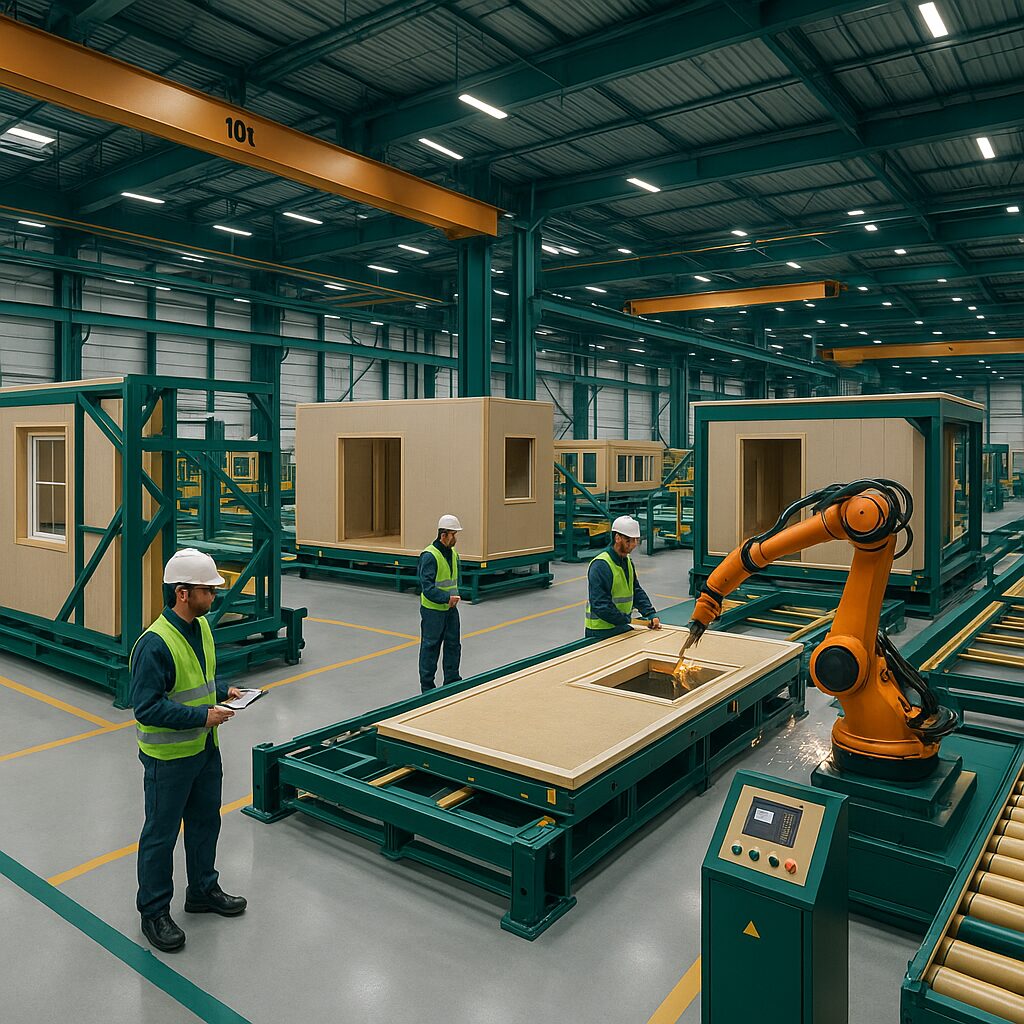
The manufacturing process itself represents a technological leap forward from traditional construction. Robotic assembly systems ensure precision to millimeter tolerances, while 3D printing technology enables the creation of complex architectural elements impossible through conventional methods. Drones conduct real-time quality inspections throughout production, identifying potential issues before modules leave the factory. This technological sophistication results in superior build quality, fewer defects, and lower lifetime maintenance costs that enhance investment returns.

Navigating regulatory frameworks and compliance.

Success in modular home investment requires a comprehensive understanding of evolving regulatory landscapes that govern this innovative sector. The Building Regulations 2010, updated for 2025 implementation, establish stringent standards for structural safety, fire resistance, energy efficiency, and accessibility that modular homes must meet or exceed. The Future Homes Standard, mandatory from 2025, requires all new homes, including modular constructions, to achieve 75-80% carbon emission reductions compared to current standards, necessitating low-carbon heating systems, enhanced insulation, and renewable energy readiness.

Planning permission considerations for modular homes mirror traditional construction requirements. Local authorities recognise the growing benefits of factory-built solutions in meeting housing targets with greater efficiency. Properties intended as permanent residences must have full planning approval regardless of construction method, with applications assessed based on design quality, environmental impact, and alignment with local development plans. Early engagement with planning authorities proves essential, as some councils have established fast-track processes for high-quality modular developments that address local housing needs.

Fire safety regulations deserve particular attention given historical concerns about non-traditional construction methods. Current standards mandate at least 30-minute fire resistance for all structural elements, with comprehensive fire detection and suppression systems required throughout. Third-party accreditation through schemes like BOPAS (Buildoffsite Property Assurance Scheme) provides extra assurance to lenders, insurers, and purchasers, facilitating mortgage availability and insurance coverage comparable to traditional properties.

Market dynamics and growth drivers

The UK modular homes market operates within powerful growth dynamics driven by converging economic, social, and environmental factors. Government commitments to deliver 300,000 new homes annually create unprecedented demand for construction solutions that can be deployed quickly and at scale. Post-Brexit labour shortages affecting traditional construction further accelerate modular adoption, as factory production requires fewer skilled workers while maintaining quality standards. Environmental mandates, including net-zero targets and biodiversity requirements, favour factory-controlled production that minimises waste and environmental disruption.

The market structure shows clear segmentation, with permanent modular construction leading at 66.08% of revenue. This reflects a buyer preference for quality, lasting housing over temporary options. Single-family modular homes make up over 65% of sales, highlighting strong consumer acceptance of factory-built residences. Geography, England holds a 71% market share. However, Scotland is growing quickly as authorities see modular construction’s potential to tackle housing shortages in remote areas.

Major manufacturers like Laing O’Rourke, Premier Modular, Bouygues Construction, and Skanska add credibility and stability to the sector. These established companies invest heavily in research, development, and production, ensuring ongoing innovation and quality. At the same time, innovative startups such as Studio Bark and Pocket Living focus on niches like sustainable self-build and affordable urban housing, broadening market access.

Investment Strategies for Different Buyer Profiles

Successful modular home investment needs strategies that match specific goals and risk levels. First-time buyers can enjoy affordability, with entry-level properties starting at £120,000, including land prep and installation. These buyers should target established developments with solid track records. This ensures mortgage options and avoids potential issues with untested designs or manufacturers.

Buy-to-let investors see great value in modular properties due to higher yields and lower maintenance. The average rental yield of 5.5% and reduced operating costs offer strong income potential. Focusing on locations near job centres, universities, and transport hubs boosts rental demand. Also, the energy efficiency of modular homes attracts quality tenants who are willing to pay more for lower utility costs. Diversifying across several modular properties allows for better management and spreads risk.

Property for sale Workers in safety vests and helmets supervise a robotic arm assembling modular building panels in a modern, well-lit factory—a scene highlighting the efficiency of prefab homes UK and the future of sustainable home investment. Presented by Palace Auctions


High-net-worth individuals and institutional investors are seeing the potential of modular construction for large projects. This method allows for hundreds of units to be built at once through factory production and site preparation. This speeds up housing delivery. Working with established manufacturers ensures quality control and warranty protection. Plus, innovative financing models, like build-to-rent, create stable, long-term income.

International investors benefit from the current value of the pound, making UK property investments cheaper. The growth of the modular sector and government backing add to potential appreciation beyond currency benefits. However, these investors face challenges like a 2% stamp duty surcharge and changing tax rules for overseas property ownership.

Sustainability and Environmental Benefits

Environmental factors are increasingly influencing property investment choices, making modular homes attractive as sustainable options. Factory production can cut construction waste by up to 90% compared to traditional homes. Unused materials are recycled instead of being sent to landfills. Precision manufacturing reduces material use and ensures structural strength, cutting embodied carbon by 20-40% based on design and materials.

Operational sustainability is strong, with modular homes often scoring EPC ratings of B or higher. In contrast, existing homes usually rate C or D. Features like advanced insulation, airtight construction, and renewable energy systems cut heating and cooling needs by up to 75%. This leads to lower utility costs and happier tenants.

Biophilic design adds living walls, natural ventilation, and circadian lighting. These elements create healthier indoor spaces that boost occupant well-being and lower energy use.

Modular construction also supports a circular economy, offering long-term value. Unlike traditional buildings, modular homes can be taken apart, moved, or changed as needs shift. This keeps material value and cuts down on demolition waste. Such flexibility is especially useful for businesses needing adaptable spaces. Savvy investors see this as a way to reduce risks from changing markets or regulations.

Risk Management and Due Diligence

Modular home investment offers great chances, but success needs careful risk assessment and strategies. Choosing the right manufacturer is key. If a company fails, projects can remain unfinished and warranties might be void. The 2023 collapse of Ilke Homes, despite strong backing, shows the need for thorough checks on manufacturers’ financial health, past performance, and production capacity. Diversifying among several manufacturers or picking established firms with solid balance sheets lowers risk.

Quality consistency is also important. Not all modular homes meet the same standards. Inspections during manufacturing and installation ensure that specifications are followed. Third-party certification adds extra quality assurance. Knowing warranty details, such as coverage length, exclusions, and claim processes helps guard against defects or performance problems.

Market perception can be a challenge. Some buyers still link modular homes to temporary or low-quality housing. This stigma, though fading, can impact resale values and rental demand in certain areas. Choosing top-quality manufacturers, ensuring expert installation, and keeping properties well maintained can help change perceptions as market education continues to grow.

Financing Considerations

Financing needs careful thought. Not all lenders provide mortgages for modular homes. BOPAS accreditation helps with mortgage options. Buyers should get pre-approval for financing before making any purchases. Insurance availability can also differ. Some insurers may charge higher premiums or exclude specific modular types. Working with insurance brokers who know modular properties can help secure good coverage at competitive rates.

Future Outlook and Market Opportunities

The modular homes market is set for impressive growth. Technological advances, regulatory support, and market changes are creating new opportunities. Projections show the market will grow from £15.73 billion in 2024 to £25.10 billion by 2030. This represents an 8.2% annual growth rate, surpassing traditional construction. Government housing goals and sustainability mandates support this trend. Investors have many options across the risk-return spectrum.

Technological progress will keep shaping the sector. Artificial intelligence will enhance design and production. Augmented reality will allow for virtual customisation and viewing. Blockchain technology will make property transactions and ownership checks smoother. This will cut costs and boost transparency. Advanced materials, like graphene composites and self-healing concrete, will improve durability and performance. This enhances long-term value.

Regulatory changes that support sustainable building will speed up modular adoption. Possible incentives may include lower stamp duty for energy-efficient homes and faster planning for modular projects. The new Home Energy Model (HEM) will standardise energy performance evaluations. This will make it easier to compare properties and reward better efficiency.

International expansion opportunities emerge as UK manufacturers leverage expertise to enter growing global markets. Investors participating in leading manufacturers’ growth can benefit from geographic diversification while maintaining exposure to familiar UK market dynamics. Export potential particularly exists in markets facing similar housing shortages and sustainability pressures, including Australia, Canada, and Northern Europe.

Conclusion: Seizing the Modular Revolution

Modular homes investment is a game changer. It sits at the crossroads of technology, sustainability, and profit. The average return on investment (ROI) is 5.6 percentage points higher than traditional construction. Faster deployment means quicker income, and rising market demand boosts appeal. The UK market is set to grow to £25.10 billion by 2030. This growth opens up great opportunities for early investors in this changing field.

Success depends on understanding what makes modular construction different from traditional methods. This includes rules, technology, and market trends. By choosing quality manufacturers, doing proper research, and matching investment strategies with clear goals, investors can achieve better returns. They also help create sustainable housing solutions. With government support, technology advances, and shifting consumer tastes, modular homes are more than alternative investments; they represent the future of property development.

Palace Auctions offers complete support for investors looking at modular homes. We help you find the right properties, understand regulations, and connect with trusted manufacturers. Our team knows both traditional and innovative property markets. This ensures you can make the most of your investments while managing risks. Start your modular home investment journey today. Check out our upcoming auctions for modular properties. You can also access detailed market analysis and connect with experts who know the current and future opportunities in this exciting sector.

Page last updated: 13 October 2025, 08:57 GMT

Modular and Futuristic Homes – Sales and Investment opportunities

Modular & Futuristic Homes: Investment Tools, Sustainability, and FAQs

Key Takeaway: Modular homes investment delivers superior 53% average ROI compared to 47.4% for traditional properties, with construction 5.5 months faster and rental yields reaching 5.5%. The UK market’s growth from £15.73 billion to projected £25.10 billion by 2030 creates exceptional opportunities for forward-thinking investors ready to embrace the future of sustainable, technology-enhanced property development.


Unlock the full potential of your property investment strategy with our exclusive ROI Comparison Tool—designed to help you evaluate the financial performance of modular homes versus traditional builds. By entering your purchase price, build timeline, and projected rental income, you’ll see how modular homes consistently outperform, boasting a 53% average ROI and delivering robust rental yields of up to 5.5%. With construction times averaging 5.5 months faster, investors benefit from quicker returns and reduced holding costs, all while capitalizing on a market set to surge from £15.73 billion in 2025 to £25.10 billion by 2030.Sustainability is at the heart of the modular revolution.

Our Sustainability Calculator empowers you to measure the environmental impact and energy savings of your next project. Discover how modular construction can cut embodied carbon by up to 45%, reduce energy use by 30%, and slash construction waste by as much as 90% compared to conventional methods. Modern modular homes routinely achieve 20–30% lower carbon footprints and up to 40% greater energy efficiency, translating into annual utility bill savings of £800–£1,200 for a typical three-bedroom property. These advantages not only benefit the planet but also enhance long-term asset value and eligibility for green mortgage incentives.

Quick FAQ:

  • Mortgage Availability: Most major UK lenders—including Halifax, NatWest, Santander, and Nationwide—now offer mortgages for modular homes, with loan-to-value ratios typically between 60–80%. Specialist lenders may go up to 85% for BOPAS-certified builds, and green mortgage products are available for energy-efficient properties.
  • Planning Permission: Modular homes require full planning permission, just like traditional builds. Lenders will require evidence of planning approval and compliance with UK Building Regulations before releasing funds.
  • Warranty Terms: To secure a mortgage, your modular home must carry a recognized 10- or 12-year structural warranty from providers such as NHBC, BLP, or BOPAS, ensuring durability and lender confidence. For self-build projects, staged payment mortgages are available.

Reset password

Enter your email address and we will send you a link to change your password.

Get started with your account

to save your favourite homes and more

Sign up with email

Get started with your account

to save your favourite homes and more

By clicking the «SIGN UP» button you agree to the Terms of Use and Privacy Policy

Create an agent account

Manage your listings, profile and more

Phone

Buyers will use it to contact you.

By clicking the «SIGN UP» button you agree to the Terms of Use and Privacy Policy

Create an agent account

Manage your listings, profile and more

Sign up with email