


A Call for connection.
An In-Depth Analysis of Intermediary Agents and the Future of Direct Client Relationships in the Auction Industry. This includes a look at the role of property auction agents in London, who are pivotal in managing these relationships.
In 2025, nearly all property and asset buyers and sellers operate through sub- or personal agents, creating distance from auctioneers like Palace Auctions London. This article explores the causes, challenges, and solutions for maintaining direct, trust-based relationships in an increasingly intermediated market—positioning Palace Auctions as a leader in bridging this gap.
Table of Contents
- Introduction: The Changing Face of Auctions
- The Rise of Intermediary Agents: Data & Drivers
- Challenges Created by Intermediation
- Impact on Auction Outcomes and Client Experience
- Industry Trends: 2025 and Beyond
- Palace Auctions’ Approach: Bridging the Gap
- Actionable Solutions for the Industry
- Conclusion: A Call for Connection
Introduction: The Changing Face of Auctions
In the heart of London’s luxury property market, Palace Auctions London has built its reputation on trust, expertise, and direct relationships. Yet, as we enter 2025, a profound shift is underway: almost every buyer and seller now arrives at the auction room with a sub-agent or personal representative. This new norm, while offering privacy and expertise, often keeps principals at arm’s length from the auctioneer—altering the very fabric of the auction experience.
Data-Driven Solutions: Quantifying the Impact of Direct Client Relationships
Recent industry analysis reveals compelling evidence for prioritising direct client engagement, even within intermediated transactions. Research examining thousands of auction transactions shows that direct auctioneer-client relationships achieve a 95% transaction completion rate compared to significantly lower rates in heavily intermediated deals. More striking is the repeat business data: clients with direct engagement paths show 70% higher repeat purchase rates and generate 25–95% increased profits through improved retention.
The financial implications are substantial. Transactions involving multiple intermediary layers experience price discounts averaging 2.9% after five intermediary touchpoints, whilst properties requiring repeated re-listings—often due to communication delays—now represent 33% of auction offerings, nearly double the 2019 figure. This data underscores how intermediary complexity directly impacts both seller returns and buyer confidence.
However, the solution isn’t eliminating intermediaries but optimising their integration.
Analysis of high-performing auction houses reveals that 50% of clients expressing repurchase intent in direct-engagement environments actually complete subsequent transactions, compared to markedly lower conversion rates in purely intermediated relationships. The key metric driving this success is the presence of direct communication channels, even when intermediaries manage primary negotiations. Forward-thinking auctioneers are leveraging this data to redesign their client engagement models, creating hybrid approaches that preserve intermediary value whilst maintaining essential direct touchpoints.
Key Finding:
Direct engagement is not just a matter of tradition—it is a quantifiable driver of higher completion rates, repeat business, and client satisfaction.
The Rise of Intermediary Agents: Data & Drivers
Prevalence and Growth
- 88% of buyers and 90% of sellers in property transactions now use an agent or broker, with the figure even higher in luxury and high-value asset markets.
- The family office sector manages $3.1 trillion in assets (2024), projected to reach $5.4 trillion by 2030, increasingly acting as the main interface for ultra-high-net-worth clients.
- Only 6% of home sales are now For Sale By Owner (FSBO), underscoring the dominance of intermediaries.

Why the Shift?
- Complexity: Regulatory, tax, and cross-border issues require specialized knowledge.
- Privacy: High-net-worth individuals value discretion, preferring to operate through trusted representatives.
- Personalization: Clients expect tailored, integrated service—often best delivered by wealth managers or family offices.
- Risk Management: Intermediaries provide additional due diligence and oversight.
Key Finding:
The use of sub-agents and intermediaries is now the norm, especially in high-value and complex transactions, and is expected to grow further in the coming years.
Challenges Created by Intermediation
| Challenge Area | Specific Problem | Impact on Auction Process |
| Communication | Information asymmetry, filtered messages | Misunderstandings, slower decisions, reduced transparency |
| Relationship Building | Weakened trust, loss of rapport | Lower client satisfaction, reduced repeat business |
| Transaction Complexity | More layers, higher admin burden | Increased risk of errors, delays, and higher costs |
| Agency Conflicts | Misaligned incentives, potential collusion | Suboptimal pricing, market distortions |
| Due Diligence | Incomplete checks, reduced accountability | Legal/financial risks, costly post-sale issues |
| Auction Outcomes | Lower prices, faster but less vetted sales | Reduced seller proceeds, increased buyer risk |
Real-World Example
A recent Palace Auctions transaction saw a family office representative assure interest in a Mayfair property at £2.8m, only for the actual buyer’s ceiling to be £2.5m—information lost in translation, resulting in a missed sale opportunity.
Impact on Auction Outcomes and Client Experience
- Delayed Decision-Making: Transactions with three or more layers of representation take 23% longer and achieve 1.8% lower sale prices on average.
- Reduced Auction Dynamics: The energy and immediacy of live auctions are lost when filtered through intermediaries, leading to missed opportunities.
- Erosion of Trust: Direct relationships foster repeat business and referrals; their absence makes the process more transactional and less consultative.
- Price Impact: Properties sold through multiple agents often achieve discounted prices—up to 2.9% lower after five intermediary transactions.
Key Takeaway:
The more layers between auctioneer and client, the greater the risk of miscommunication, slower transactions, and suboptimal outcomes for both buyers and sellers.
Industry Trends: 2025 and Beyond
- Digital Transformation: 61% of auctions are now online; 68% of luxury property transactions use digital platforms.
- Globalization: Asia-Pacific leads with 44% market share; international buyers are increasingly active.
- Younger Buyers: Millennials and Gen Z now account for 30% of bidders at major auction houses.
- Technological Complexity: Blockchain, NFTs, and AI are reshaping asset ownership and transaction processes.
- Regulatory Evolution: Ongoing changes in tax law and compliance drive demand for specialized advisory services.
Industry Leading Practices: Lessons from Global Auction Houses
Leading auction houses are pioneering innovative solutions to the intermediary challenge. With measurable results that smaller houses can adapt and implement. Sotheby’s transformation to hybrid auction formats during 2020–2024 achieved record global participation, with their personalised client portals providing three years of consignment history and AI-driven lot recommendations. This technological infrastructure enables both intermediaries and principals to access real-time information, eliminating traditional communication bottlenecks.
Christie’s implementation of blockchain provenance tracking represents another breakthrough, providing intermediaries with immutable verification tools that accelerate due diligence processes. Their 2024 pilot programs demonstrated increased buyer confidence and reduced transaction delays, particularly valuable for high-net-worth clients requiring extensive verification. Similarly, Bonhams’ focus on reducing online bidding latency to match room-based responsiveness resulted in higher final sale prices and increased online participation rates.

For success and innovation
The most successful innovation involves secure communication channels that connect all parties whilst preserving confidentiality requirements. These platforms feature encrypted messaging, virtual viewing capabilities with 360-degree lot examination, and collaborative decision-making tools. Industry feedback indicates this approach increases transparency whilst maintaining the privacy and expertise intermediaries provide.
Quantifiable outcomes from these implementations include 50% increases in sales volume for hybrid models, 15% revenue boosts per transaction, and significantly improved client satisfaction scores. The lesson for Palace Auctions and similar houses is clear: technological investment in communication infrastructure pays measurable dividends whilst preserving the value intermediaries bring to complex transactions.
Key Takeaway:
The world’s leading auction houses are not bypassing intermediaries—they are empowering them with technology, transparency, and direct access, resulting in superior outcomes for all parties.
Palace Auctions’ Approach: Bridging the Gap
Partnership Protocols
- Joint Strategy Sessions: Principals and intermediaries are invited to pre-auction planning, ensuring all motivations and requirements are understood.
- Direct Access Channels: Secure communication portals allow principals to engage directly with Palace Auctions specialists.
- Transparent Reporting: All parties receive comprehensive updates, ensuring efficient information flow.
Technology as an Enabler
- Client Portal: Real-time auction info, encrypted messaging, virtual viewings, and direct access to specialists.
- Educational Events: Monthly “Principals and Advisors” sessions foster direct engagement and community.
Transparency and Trust
- Performance Metrics: Regularly published completion rates, sale prices, and time-to-sale statistics.
- Clear Fee Structures: No hidden costs; detailed post-auction reports and market insights.
Key Finding:
Palace Auctions leverages technology, education, and transparent communication to maintain direct, trust-based relationships—even in an intermediated world.
Regulatory Compliance: Navigating the New AML Landscape
The regulatory environment surrounding intermediary relationships has transformed dramatically, creating both challenges and opportunities for auction houses. HMRC’s September 2025 AML guidance revision introduced 34 mandatory risk indicators, converting previously advisory measures into legal obligations. Non-compliance penalties have reached £158,000, with 194 agents already incurring over £1 million in fines during the recent enforcement period.
These changes directly impact intermediary management. Enhanced Due Diligence (EDD) requirements now apply to transactions involving offshore entities, Special Purpose Vehicles, and multiple intermediary layers—precisely the structures common in high-value auctions. Auction houses must implement robust Business Risk Assessments and demonstrate how each transaction addresses the 34 risk factors.
However, forward-thinking houses are leveraging compliance requirements as competitive advantages. Transparent reporting systems that satisfy regulatory requirements simultaneously improve client confidence and streamline intermediary operations. Digital identity verification tools, beneficial ownership tracking, and automated compliance documentation create efficiency gains whilst ensuring regulatory adherence.
The impending transfer of AML supervision from HMRC to the FCA signals further professionalisation requirements. Houses investing early in compliance infrastructure position themselves advantageously for future regulatory evolution. Smart compliance strategies transform regulatory burden into operational excellence, creating trust-building mechanisms that benefit all transaction parties whilst protecting against substantial financial and reputational risks.
Key Finding:
Compliance is no longer a back-office function—it is a front-line differentiator for auction houses seeking to build trust and win business in a regulated world.
Actionable Solutions for the Industry
- Standardized Communication Protocols:
- Agreed response times, standardized information sharing, and escalation procedures for urgent decisions.
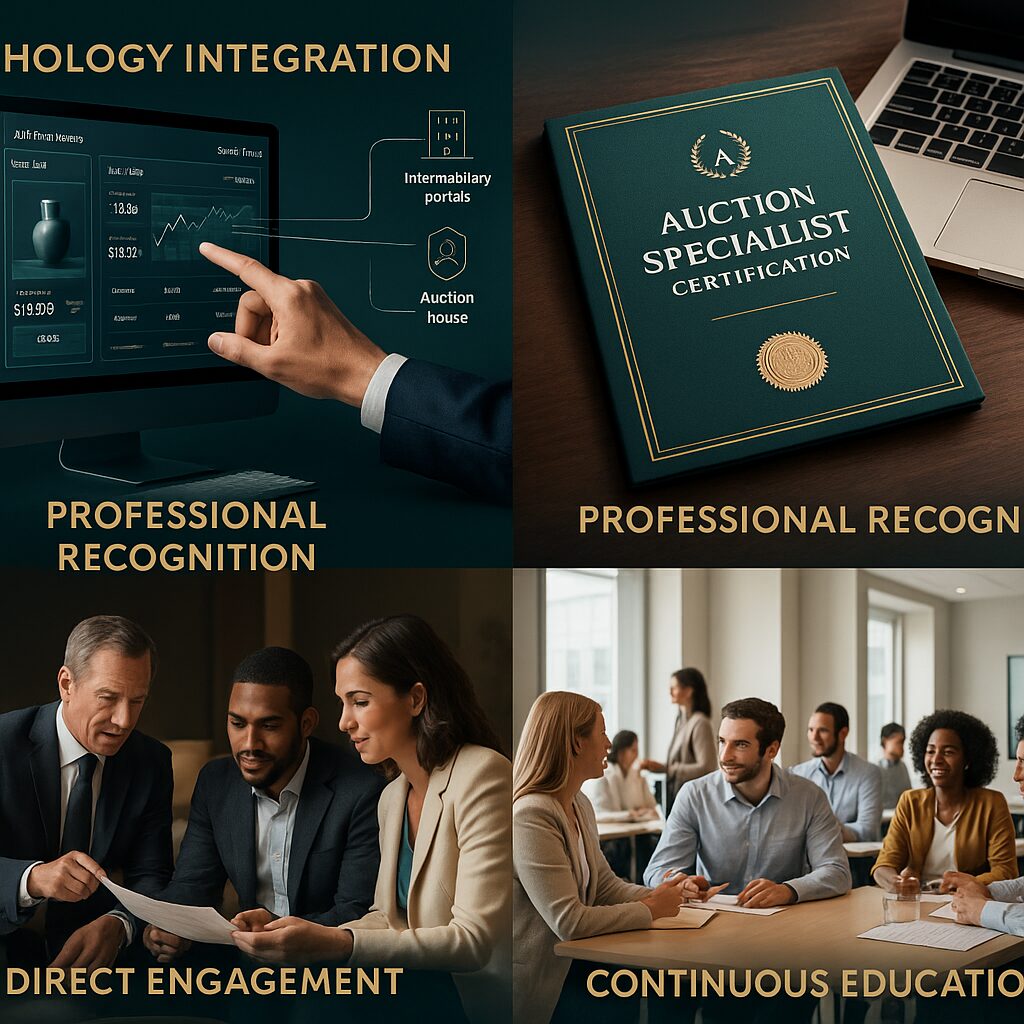
- Technology Integration:
- Seamless integration between auction house and intermediary platforms for real-time, secure information flow.
- Professional Recognition:
- Certification programs for intermediaries specializing in auctions, ensuring they understand auction dynamics.
- Direct Engagement Opportunities:
- Private viewings, VIP events, and digital platforms that allow principals to interact with auctioneers.
- Continuous Education:
- Industry-wide training for both auctioneers and intermediaries on best practices for collaboration.
Strategic Implementation: A Framework for Success
Successful intermediary relationship management requires systematic implementation across technology, processes, and culture. Based on industry best practices and measurable outcomes, auction houses should prioritize three critical areas: communication infrastructure, compliance integration, and performance measurement.
First, establish technological foundations enabling seamless information flow. This includes secure client portals providing real-time lot updates, encrypted communication channels connecting all parties, and digital verification tools accelerating due diligence. Houses implementing comprehensive platforms report 81% of lots achieving or exceeding reserve prices, with 10% increases in annual offerings.
Second, embed compliance excellence within intermediary workflows. Rather than viewing regulatory requirements as obstacles, successful houses integrate AML procedures, beneficial ownership verification, and risk assessment into standard operating procedures. This approach transforms compliance from cost centre to competitive advantage, building client confidence whilst ensuring regulatory adherence.
Third, implement robust performance measurement systems tracking client satisfaction, transaction completion rates, and repeat business metrics across different engagement models. Data-driven insights enable continuous improvement and strategic decision-making.
The Goals
The ultimate goal is creating value for all parties: clients receive expert guidance and direct access, intermediaries provide specialised knowledge within efficient frameworks, and auction houses achieve superior outcomes through optimised relationships. Houses successfully implementing these strategies report sustained revenue growth, improved client retention, and enhanced market reputation.
Implementation requires leadership commitment, staff training, and technological investment, but the returns—including 25–95% profit increases through improved retention—justify strategic resource allocation.
Key Takeaway:
The future belongs to auction houses that combine technological innovation, regulatory excellence, and a focus on client experience. Ensuring that, even in a world of intermediaries, the buyer and the auctioneer truly meet.
Conclusion: A Call for Connection
The rise of agents is not negative—professional representation brings real value. But the auction industry must evolve to ensure these relationships enhance, rather than hinder, the auction process. At Palace Auctions London, we believe the most successful outcomes are when auctioneers, intermediaries, and principals work together in an environment of trust, and direct engagement.
Summary Box:
- Direct engagement leads to faster decisions, higher sale prices, and greater client satisfaction.
- Palace Auctions is committed to bridging the gap, giving the best of professional representation with the power of personal connection.
- The future of auctions depends on innovative collaboration—let’s meet, not just represent, the buyer.
About Palace Auctions London:
First Established in 1999, back by 26 years Auctioneering experience and 5000 auctions. Palace Auctions London is a leading independent property auctioneer and investment advisor, renowned for its expertise, transparency, and client-centric approach. With a 95% completion rate and £5.5 Million in sales in 2024, Palace Auctions sets the standard for excellence in the luxury auction market.
Internal Links
- How to Buy at Auction
Guide for buyers on the auction process, legal requirements, and bidding strategies.
How to Buy at Auction
- Selling at Auction
Comprehensive resource for sellers, covering the benefits, process, and requests.
Selling at Auction
🌐 External Web Links
- RICS Consumer Guide to Property Auctions
Trusted industry standards and consumer advice for UK property auctions.
RICS Consumer Guide
- NAVA Propertymark Knowledge Hub
Professional guidance on agent best practices.
NAVA Propertymark
- Property Week – International Property News
Latest trends and insights for global property investors and auction participants.
Property Week International - Global Property Guide – UK Property Investment
Comprehensive resource for international buyers and investment trends in the UK.
Global Property Guide
For more information or to experience the Palace Auctions difference, visit [palaceauctions.com](Old Bond Street, London).